
Type 2 Diabetes Mellitus represents a metabolic state where the pancreas either produces insufficient insulin or the peripheral tissues develop cellular resistance to its signaling. Identifying pre-diabetic markers early provides an invaluable window for reversal.
Understanding Insulin Resistance:
When we consume simple refined sugars, plasma glucose spikes rapidly. The pancreas responds by pumping out insulin. Chronic spikes eventually exhaust pancreatic beta-cells and desensitize cellular insulin receptors, leading to persistently elevated baseline glycemic levels.
Early Warning Symptoms to Monitor:
- Polydipsia (unusual, persistent thirst) and frequent nocturnal urination.
- Chronic post-meal fatigue and sudden energy crashes.
- Slow-healing minor cuts or recurring skin infections.
- Acanthosis nigricans (velvety hyperpigmentation around the neck folds or axillae).
Practical Preventative Habits:
1. Emphasize low glycemic-index complex carbohydrates such as oats, legumes, and cruciferous vegetables.
2. Incorporate at least 150 minutes of moderate-intensity aerobic movement alongside resistance training weekly to heighten skeletal muscle glucose uptake.
3. Monitor your Glycated Hemoglobin (HbA1c) every 6 months if you possess a familial history.
Consulting with an endocrinologist or physician ensures tailored metabolic guidance before microvascular or neuropathic damage develops.
Diabetes & Endocrinology
•
1 min read
•
Published Sep 06, 2026
•
108 views
Preventing Type 2 Diabetes: Dietary Choices, Physical Activity & Early Warning Markers

Dr. Meera Nambiar
Verified Specialist
MBBS, MS (Neuro Surgery) • Clinical Neurology
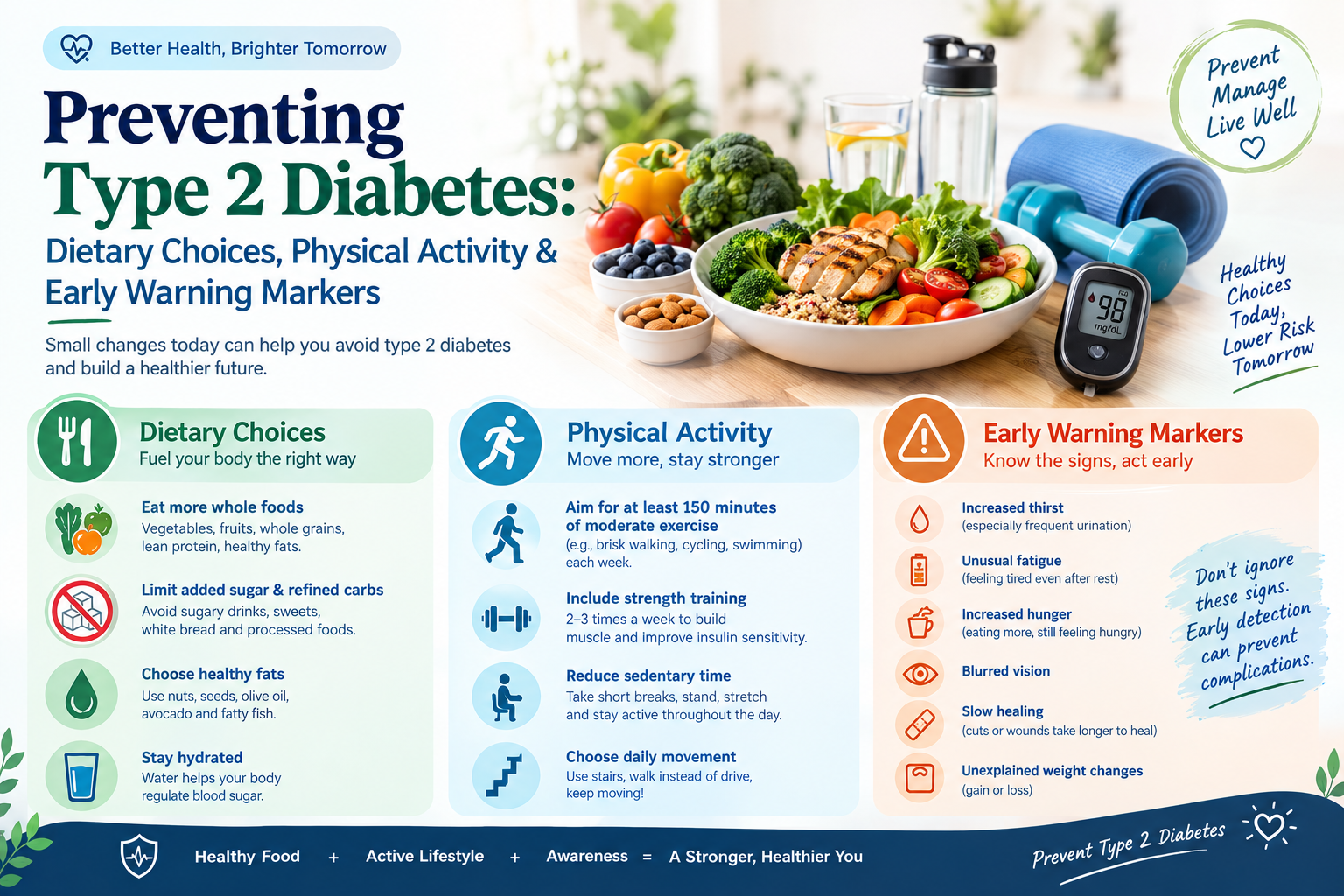
"Type 2 Diabetes is predominantly manageable and often preventable through informed dietary discipline, structured daily movement, and routine HbA1c screening."
Specialist Medical Consultation
Need medical guidance regarding Diabetes & Endocrinology?
Dr. Meera Nambiar is actively accepting patients for clinical consultations and 7-day follow-up care at Jodha Care.